

On June 10, Jiangxi Sange held a special work conference focused on customer order review and comprehensive review of quality inspection issues in the company’s internal meeting room. Presided over by Manager Wu, the meeting gathered core team members from Production, Quality Inspection, Business and Project Management departments.Participants conducted in-depth analysis on the full-process management of ongoing customer orders and various problems identified in previous random quality inspections. They sorted out quality loopholes one by one and dug deep into root causes. In response to actual market and customer demands, the team also clarified detailed implementation rules for quality improvement and mandatory standards for standardized order delivery in the next phase. The conference aims to drive rectification through problem reviews, uphold product quality via standardized management, fully reinforce the quality assurance system, and accurately meet customers’ diversified delivery requirements.
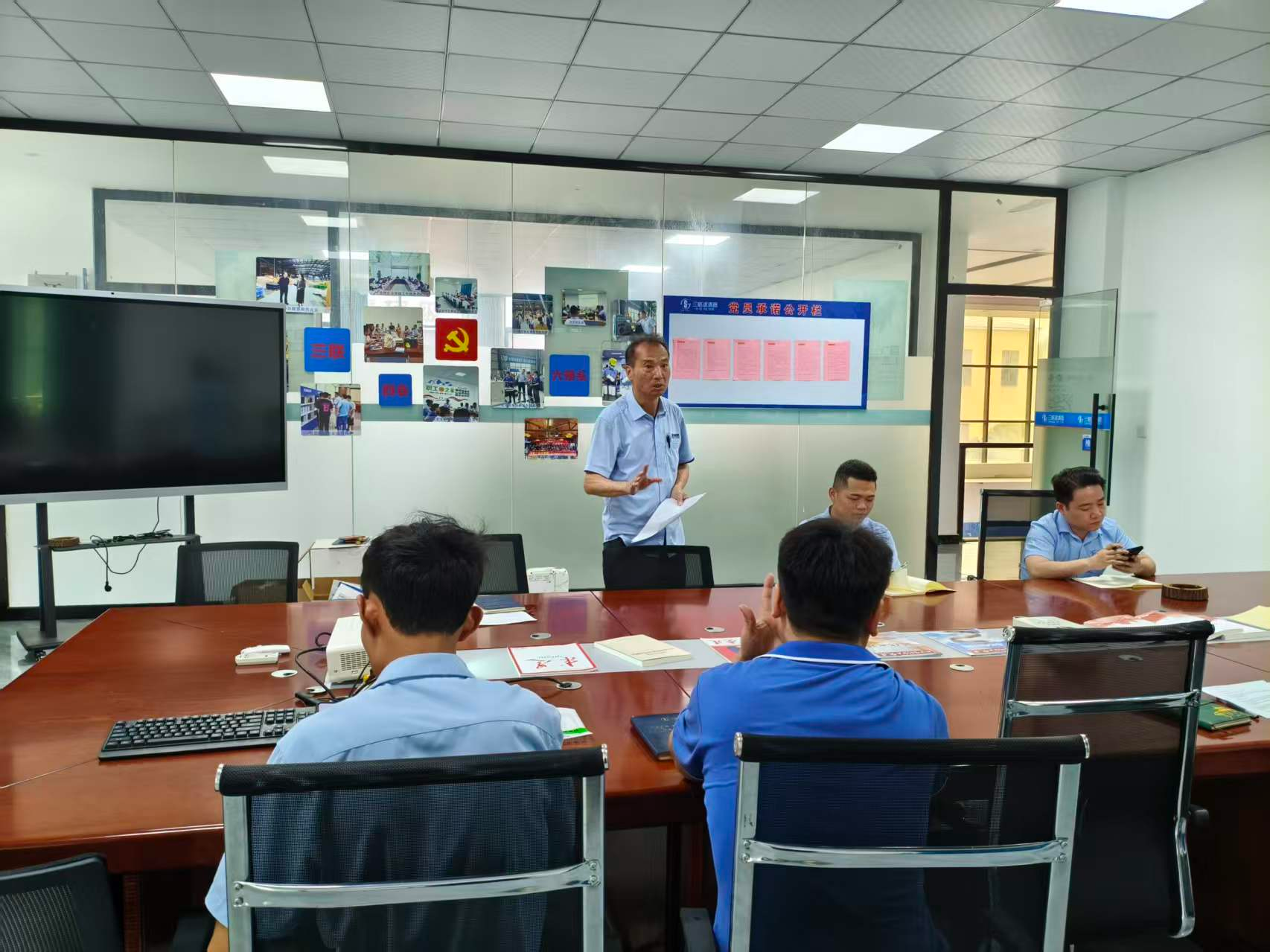 The meeting venue featured neat and eye-catching Party building cultural walls, public bulletin boards for Party members’ commitments and cultural slogans of the Staff Home. Long conference tables were neatly arranged with Party building reading materials, quality inspection ledgers, detailed customer order documents and product test reports. All attendees wore uniform work clothes, reading past quality inspection records, jotting down key meeting points or sharing opinions actively based on their job responsibilities.Standing in front of the conference table with documents in hand, Manager Wu kicked off the discussion agenda by referencing recent production and shipment status, customer feedback tickets and third-party random inspection data. He comprehensively reviewed typical quality issues from five key aspects: pre-order communication, in-process production control, semi-finished product testing, final inspection of finished goods and after-sales quality follow-up.
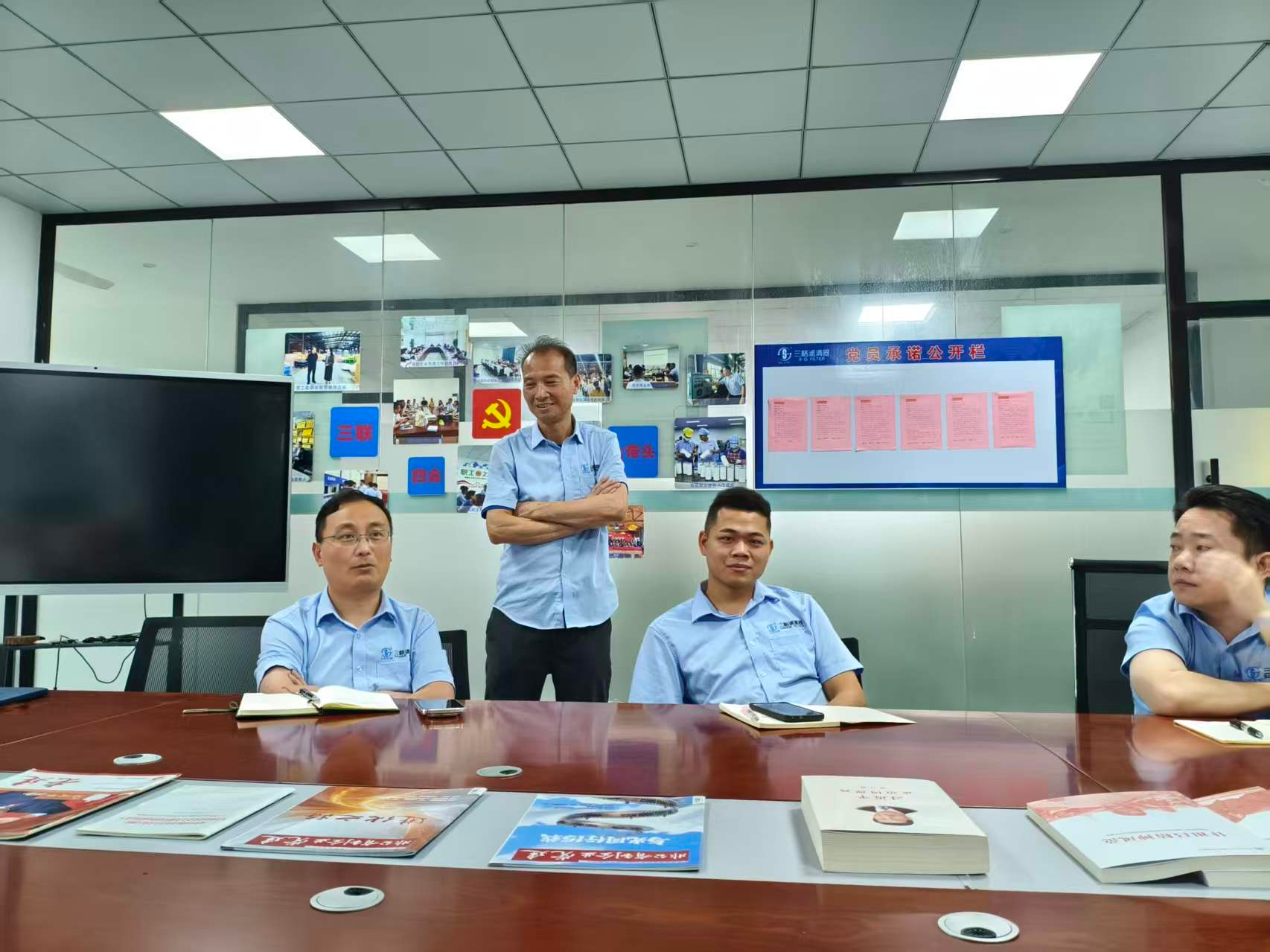 “Product quality is the foundation for an enterprise to survive in the market, and customer orders act as the direct link connecting us with clients. Any oversight in quality inspection or inadequate process control will lead to poor customer experience and damage the company’s long-built market reputation,” Manager Wu stated at the opening of the meeting to highlight the core significance of this special review session.He pointed out that the industry is facing increasingly fierce market competition nowadays. Customers have raised higher standards for product precision, delivery efficiency and consistent quality. Instead of merely pursuing order volume, the company must address internal management weaknesses. By implementing regular quality inspection review mechanisms, potential quality risks will be eliminated at the production stage to avoid repeated problems such as rework, product returns, exchanges and customer complaints.
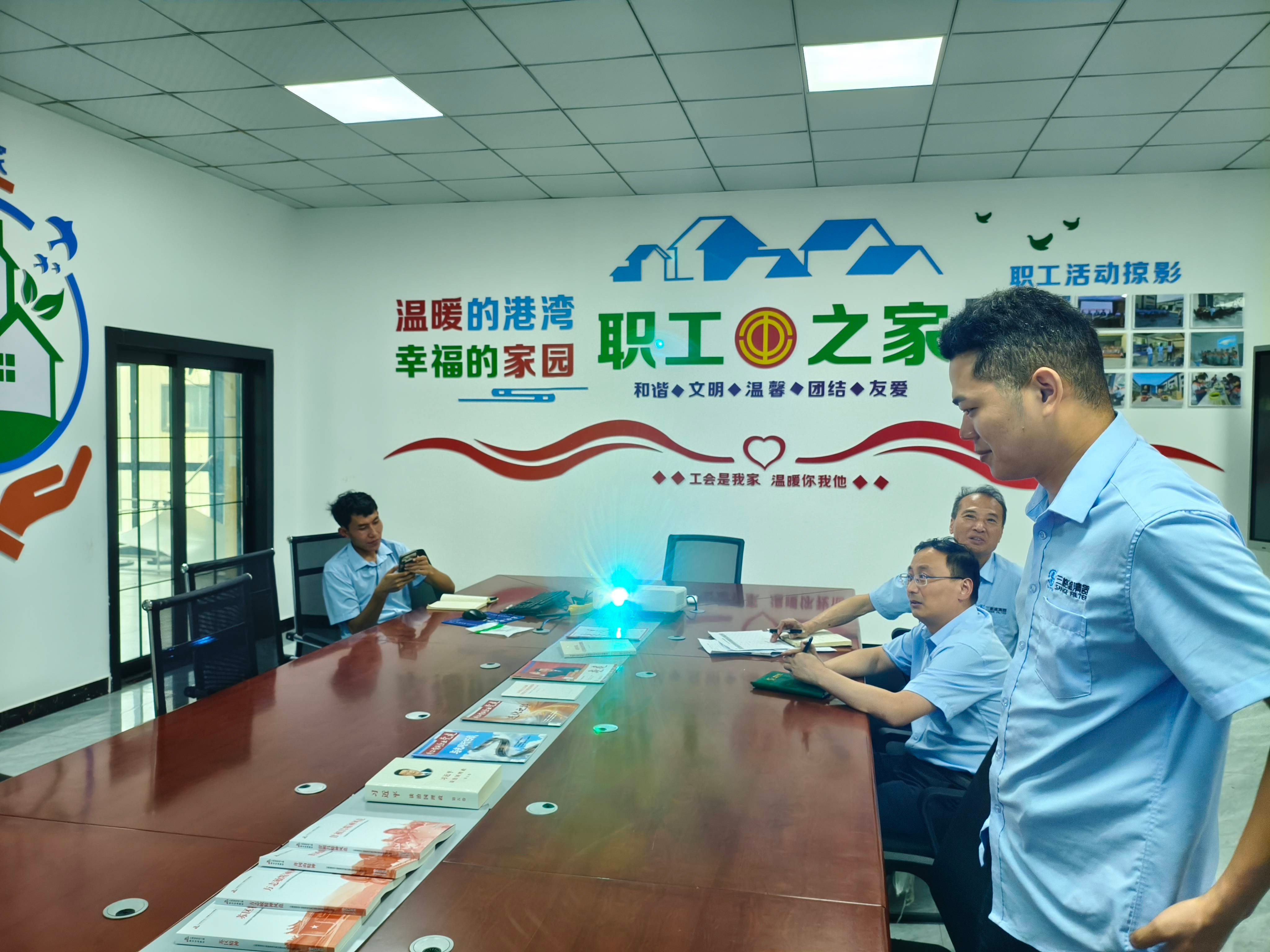
The meeting venue featured neat and eye-catching Party building cultural walls, public bulletin boards for Party members’ commitments and cultural slogans of the Staff Home. Long conference tables were neatly arranged with Party building reading materials, quality inspection ledgers, detailed customer order documents and product test reports. All attendees wore uniform work clothes, reading past quality inspection records, jotting down key meeting points or sharing opinions actively based on their job responsibilities.Standing in front of the conference table with documents in hand, Manager Wu kicked off the discussion agenda by referencing recent production and shipment status, customer feedback tickets and third-party random inspection data. He comprehensively reviewed typical quality issues from five key aspects: pre-order communication, in-process production control, semi-finished product testing, final inspection of finished goods and after-sales quality follow-up.
“Product quality is the foundation for an enterprise to survive in the market, and customer orders act as the direct link connecting us with clients. Any oversight in quality inspection or inadequate process control will lead to poor customer experience and damage the company’s long-built market reputation,” Manager Wu stated at the opening of the meeting to highlight the core significance of this special review session.He pointed out that the industry is facing increasingly fierce market competition nowadays. Customers have raised higher standards for product precision, delivery efficiency and consistent quality. Instead of merely pursuing order volume, the company must address internal management weaknesses. By implementing regular quality inspection review mechanisms, potential quality risks will be eliminated at the production stage to avoid repeated problems such as rework, product returns, exchanges and customer complaints.
During the review session, all participants faced problems objectively instead of only reporting positive results. The team compiled a complete list of recurring quality defects found in routine inspections and random sampling. Staff from the Quality Inspection Department first presented major frequent issues, including minor deviations in component assembly gaps, processing dimensions failing to comply with drawing standards, slight scratches on semi-finished products due to improper storage protection, and missing special performance tests on certain batches of finished products.On-site photos of defective products and customer feedback records were also displayed to illustrate the ripple effects of these quality problems: increased rework costs, delayed delivery schedules, and additional work for order verification and acceptance caused by customer rectification requests due to unstable product quality.
All department representatives analyzed the root causes of each problem through cross-department discussions, avoiding mutual blame. The Business team noted that verbal communication errors and incomplete written order documents for rush orders led to inconsistent production standards on the shop floor. Production supervisors admitted that frontline workers often skipped self-inspection steps to meet tight delivery deadlines, while internal cross-check supervision failed to be fully enforced.
Quality Inspection staff added that flexible implementation of inspection frequency and sampling ratios resulted in superficial appearance checks on semi-finished products, with insufficient coverage of core performance tests. The Warehouse & Logistics team reported that one-size-fits-all packaging materials failed to protect different products properly, causing appearance damage during long-distance transportation.
The team thoroughly analyzed management flaws across the entire workflow covering order communication, production processing, in-line inspection, warehousing protection and personnel management. More than ten optimization items involving communication procedures, process supervision, inspection standards, staff training and supporting services were summarized and recorded in the Quality Inspection Rectification Ledger. Each item was assigned to specific responsible positions with clear deadlines and acceptance criteria, ensuring every problem is tracked, rectified and verified.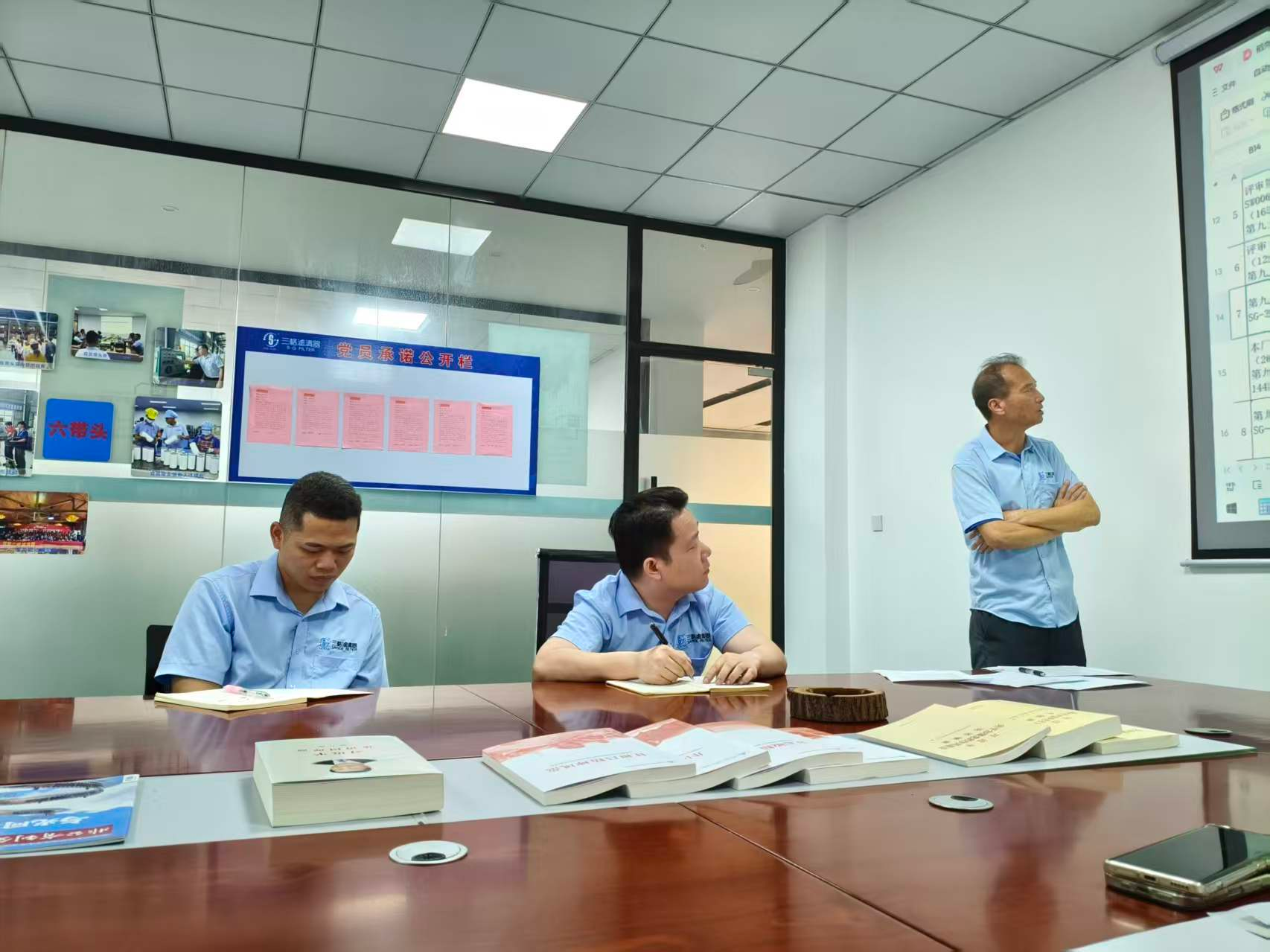 Following the quality review, the conference moved on to special order review. Manager Wu led the team to sort through all ongoing customer orders, which were categorized into regular bulk orders, customized special orders and urgent delivery orders. Participants verified technical parameters, material standards, quantities, agreed delivery schedules and additional acceptance requirements item by item.For customized orders, teams from Business, Quality Inspection and Production cross-checked design drawings on the spot and marked ambiguous technical clauses to unify internal production and inspection standards. For time-sensitive urgent orders, production schedules and inspection timelines were readjusted. A strict rule was emphasized: quality inspection procedures shall never be compromised for faster delivery. For standard orders from long-term key clients, the existing random inspection process was optimized, and a dedicated re-inspection mechanism was established to guarantee stable and uniform product quality for continuous supply.Business representatives shared the latest market insights and customer demands. Beyond basic quality compliance, customers now attach greater importance to on-time delivery, consistent quality across product batches and rapid response to after-sales quality issues. Overseas and engineering clients also put forward new requirements such as providing full-batch test reports together with goods and conducting joint pre-delivery acceptance.In response to customer feedback, Manager Wu issued new work arrangements. The Business Department was required to create classified ledgers for customer demands and fully record special acceptance rules to be shared with Production and Quality Inspection teams. The Quality Inspection Department would implement a dual-inspection & re-verification system for key client orders, with complete test files delivered along with finished products. The Production Department would adopt flexible production scheduling and reserve extra time for re-inspection to prevent rushed testing amid peak production.
At the end of the discussion, Manager Wu outlined the overall direction for company-wide quality improvement and released five practical management measures to strengthen quality accountability across all links:Standardize pre-order communication procedures A unified template for customized order confirmation will be adopted to specify dimensions, materials, craftsmanship and acceptance criteria in detail. All confirmed orders will be filed with Production and Quality Inspection teams. A pre-production technical briefing meeting will be held for large orders and special customized projects to align production and inspection standards among all related teams.
Restructure hierarchical full-process quality inspection system Inspection rules for semi-finished products and finished goods will be updated. The sampling ratio will be increased for customized products and key client orders, and full performance testing will be made mandatory for core indicators. A three-level inspection mechanism including employee self-check, team leader cross-check and professional inspector final-check will be fully enforced. Inspection performance will be linked directly to team performance appraisal to stop skipped inspection steps and missed tests.Launch company-wide quality training programs Phased professional training will be organized for production and quality inspection staff, combining on-site case studies of typical quality defects discovered in the review. Business staff will also receive training on product craftsmanship and basic inspection knowledge to improve the accuracy of demand communication. A monthly quality case sharing session will be launched to foster a company-wide mindset that every employee is a quality inspector.Optimize warehousing and transportation protection management Tailored packaging solutions and upgraded shockproof, moisture-proof and scratch-resistant packaging materials will be used for different products. An additional appearance recheck step will be added before shipment to reduce product damage during transit.Establish a long-term monthly quality review mechanism A regular monthly meeting for order and quality inspection review will be held to assess the progress of rectification tasks. Key data including monthly inspection pass rate, customer complaint rate and rework rate will be analyzed to dynamically adjust management rules and realize closed-loop management of quality issues.
“Quality improvement is not a one-time rectification campaign, but a permanent task running through all business operations. Every position and every staff member plays a vital role in quality control, from customer demand communication and production processing to finished product delivery,” Manager Wu stressed in the closing remarks.He called on all employees to abandon the outdated mindset of prioritizing output over quality, and integrate customer requirements and quality standards into daily work. Department heads shall take charge of implementing all rectification plans and follow up on ledger progress, while the Quality Inspection Department will conduct full-process acceptance checks. Strict performance penalties will be imposed on teams that fail to complete rectification or repeatedly make the same quality mistakes. The company also encourages all staff to propose suggestions for optimizing workflows. With joint efforts, Jiangxi Sange will continuously reduce product defects, improve order delivery performance, consolidate market competitiveness with reliable quality, and live up to the trust of all customers.
All department representatives analyzed the root causes of each problem through cross-department discussions, avoiding mutual blame. The Business team noted that verbal communication errors and incomplete written order documents for rush orders led to inconsistent production standards on the shop floor. Production supervisors admitted that frontline workers often skipped self-inspection steps to meet tight delivery deadlines, while internal cross-check supervision failed to be fully enforced.
Quality Inspection staff added that flexible implementation of inspection frequency and sampling ratios resulted in superficial appearance checks on semi-finished products, with insufficient coverage of core performance tests. The Warehouse & Logistics team reported that one-size-fits-all packaging materials failed to protect different products properly, causing appearance damage during long-distance transportation.
The team thoroughly analyzed management flaws across the entire workflow covering order communication, production processing, in-line inspection, warehousing protection and personnel management. More than ten optimization items involving communication procedures, process supervision, inspection standards, staff training and supporting services were summarized and recorded in the Quality Inspection Rectification Ledger. Each item was assigned to specific responsible positions with clear deadlines and acceptance criteria, ensuring every problem is tracked, rectified and verified.
Following the quality review, the conference moved on to special order review. Manager Wu led the team to sort through all ongoing customer orders, which were categorized into regular bulk orders, customized special orders and urgent delivery orders. Participants verified technical parameters, material standards, quantities, agreed delivery schedules and additional acceptance requirements item by item.For customized orders, teams from Business, Quality Inspection and Production cross-checked design drawings on the spot and marked ambiguous technical clauses to unify internal production and inspection standards. For time-sensitive urgent orders, production schedules and inspection timelines were readjusted. A strict rule was emphasized: quality inspection procedures shall never be compromised for faster delivery. For standard orders from long-term key clients, the existing random inspection process was optimized, and a dedicated re-inspection mechanism was established to guarantee stable and uniform product quality for continuous supply.Business representatives shared the latest market insights and customer demands. Beyond basic quality compliance, customers now attach greater importance to on-time delivery, consistent quality across product batches and rapid response to after-sales quality issues. Overseas and engineering clients also put forward new requirements such as providing full-batch test reports together with goods and conducting joint pre-delivery acceptance.In response to customer feedback, Manager Wu issued new work arrangements. The Business Department was required to create classified ledgers for customer demands and fully record special acceptance rules to be shared with Production and Quality Inspection teams. The Quality Inspection Department would implement a dual-inspection & re-verification system for key client orders, with complete test files delivered along with finished products. The Production Department would adopt flexible production scheduling and reserve extra time for re-inspection to prevent rushed testing amid peak production.At the end of the discussion, Manager Wu outlined the overall direction for company-wide quality improvement and released five practical management measures to strengthen quality accountability across all links:Standardize pre-order communication procedures A unified template for customized order confirmation will be adopted to specify dimensions, materials, craftsmanship and acceptance criteria in detail. All confirmed orders will be filed with Production and Quality Inspection teams. A pre-production technical briefing meeting will be held for large orders and special customized projects to align production and inspection standards among all related teams.
Restructure hierarchical full-process quality inspection system Inspection rules for semi-finished products and finished goods will be updated. The sampling ratio will be increased for customized products and key client orders, and full performance testing will be made mandatory for core indicators. A three-level inspection mechanism including employee self-check, team leader cross-check and professional inspector final-check will be fully enforced. Inspection performance will be linked directly to team performance appraisal to stop skipped inspection steps and missed tests.Launch company-wide quality training programs Phased professional training will be organized for production and quality inspection staff, combining on-site case studies of typical quality defects discovered in the review. Business staff will also receive training on product craftsmanship and basic inspection knowledge to improve the accuracy of demand communication. A monthly quality case sharing session will be launched to foster a company-wide mindset that every employee is a quality inspector.Optimize warehousing and transportation protection management Tailored packaging solutions and upgraded shockproof, moisture-proof and scratch-resistant packaging materials will be used for different products. An additional appearance recheck step will be added before shipment to reduce product damage during transit.Establish a long-term monthly quality review mechanism A regular monthly meeting for order and quality inspection review will be held to assess the progress of rectification tasks. Key data including monthly inspection pass rate, customer complaint rate and rework rate will be analyzed to dynamically adjust management rules and realize closed-loop management of quality issues.
“Quality improvement is not a one-time rectification campaign, but a permanent task running through all business operations. Every position and every staff member plays a vital role in quality control, from customer demand communication and production processing to finished product delivery,” Manager Wu stressed in the closing remarks.He called on all employees to abandon the outdated mindset of prioritizing output over quality, and integrate customer requirements and quality standards into daily work. Department heads shall take charge of implementing all rectification plans and follow up on ledger progress, while the Quality Inspection Department will conduct full-process acceptance checks. Strict performance penalties will be imposed on teams that fail to complete rectification or repeatedly make the same quality mistakes. The company also encourages all staff to propose suggestions for optimizing workflows. With joint efforts, Jiangxi Sange will continuously reduce product defects, improve order delivery performance, consolidate market competitiveness with reliable quality, and live up to the trust of all customers.
Going forward, Jiangxi Sange will fully implement all quality improvement measures, break through management bottlenecks covering order communication, production, quality inspection and after-sales service. The company will maintain strict quality control, enhance order response efficiency and deliver consistently high-quality products to satisfy diverse customer demands. With refined quality management, Jiangxi Sange will achieve steady and long-term business growth with an excellent market reputation.